Subscribe to Primary Goods
Get early access to exclusive deals, editors' picks and new launches.
Thank you! Your submission has been received!
Oops! Something went wrong while submitting the form.
NEED HELP?
CONTACT SUPPORT.webp)
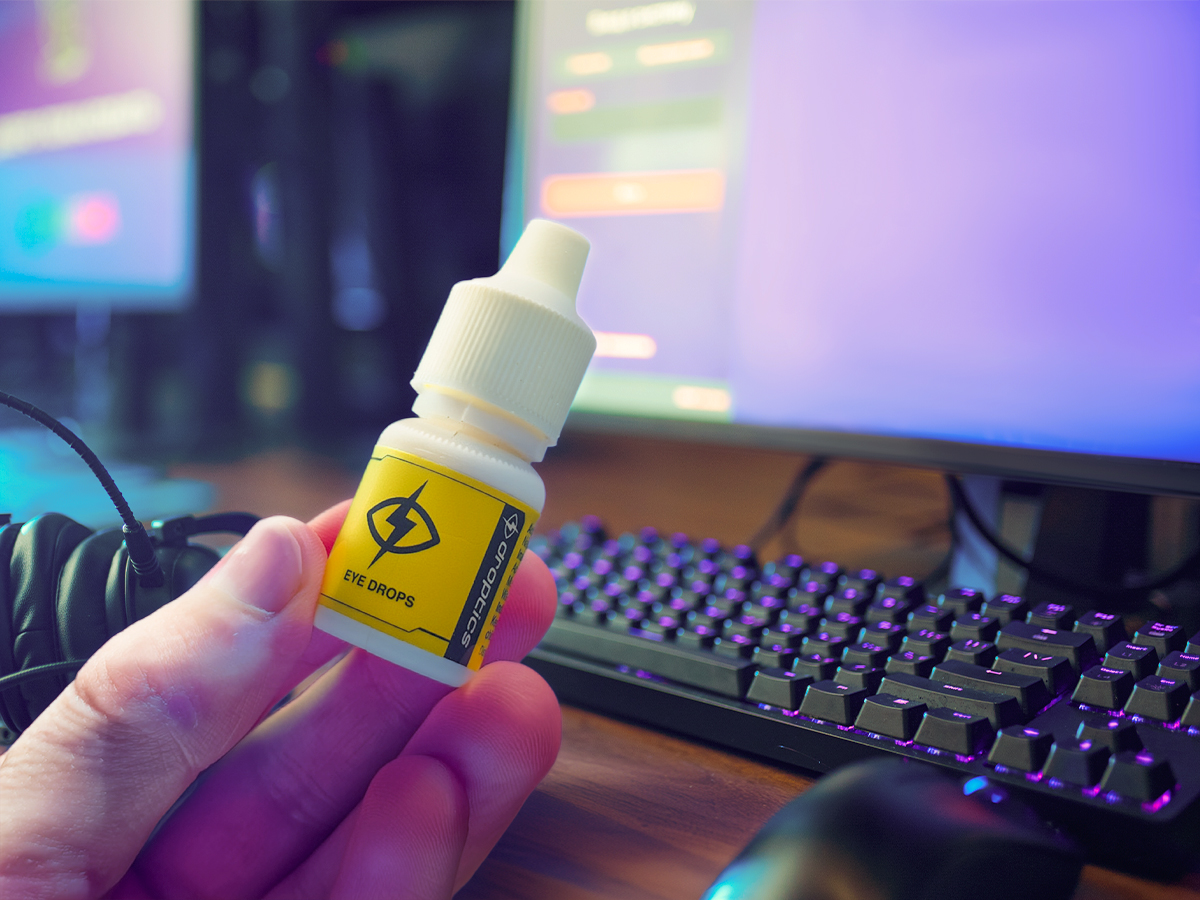
Editor's Note: Right now, Droptics is dropping (ha) their single bottle price to $9.98!
When you focus on a screen, your blink rate drops dramatically. Blinking isn’t optional, and the action provides essential maintenance for your eyes. Each full blink spreads tears evenly across the eye’s surface, replenishing moisture and maintaining optical clarity. When blinking slows, the eye’s natural lubrication system starts to fail.
Studies show that people blink 50–70% less often while using computers compared to resting conditions, a core contributor to what clinicians call computer vision syndrome.
Under normal conditions, adults blink around 12–15 times per minute. During screen-focused tasks, that number often falls to just 3–7 blinks per minute, according to guidance from the Cleveland Clinic.
We don’t just blink less when using screens, we blink less effectively. This is called incomplete blinking, where eyelids do not fully close.
Peer-reviewed review in Clinical Ophthalmology shows that incomplete blinks prevent the tear film from being fully refreshed, leaving portions of the cornea exposed.
This incomplete coverage accelerates tear evaporation and is strongly associated with burning, irritation, and the sensation that something is stuck in the eye. Ouch!
The tear film is a three-layer structure made up of lipids, water, and mucins. Its job is to keep the eye smooth, hydrated, and optically stable. When blink rate drops and blinks aren’t completed, this film evaporates faster than it can be restored.
A study published in Clinical Ophthalmology found that after prolonged computer use, participants showed a statistically significant reduction in tear film stability by the end of the workday, even if they had no prior history of dry eye disease. This explains why dryness often feels mild in the morning and progressively worse by late afternoon.

Office environments compound the problem. Air conditioning and heating systems reduce ambient humidity, which increases tear evaporation from the eye’s surface. According to the Mayo Clinic, dry indoor air is a major environmental contributor to dry eye-related symptoms.
Direct airflow, such as vents blowing toward the face, can further accelerate moisture loss. This is why eyes often feel more irritated at work than outdoors, even when your screen time is similar.
While the surface of the eye dries out, the internal focusing system is also under stress. When viewing near objects like screens, the ciliary muscle contracts to maintain focus. During extended screen use, this muscle remains engaged for hours without being able to properly relax.
This can cause soreness around the eyes, difficulty refocusing on distant objects, and end-of-day headaches. The Cleveland Clinic notes that this muscular fatigue is a core component of digital eye strain.
After many hours of near focus, your eyes can become less responsive. This can cause brief distance blur when looking away from a screen, a phenomenon linked to accommodative spasm and eye fatigue.
The American Optometric Association explains that this effect is usually temporary, but it’s a clear signal that your visual system is overworked.
Preventative strategies focus on reducing strain before symptoms appear. These include regular visual breaks, conscious blinking, screen positioning slightly below eye level, and managing indoor airflow and humidity. The widely recommended 20-20-20 rule is endorsed by both the American Optometric Association and major eye clinics.
Reactive solutions address symptoms after they appear. Lubricating eye drops can temporarily restore moisture to the tear film and relieve dryness, but they don’t correct reduced blink rate or muscle fatigue. Eye care professionals generally recommend pairing reactive relief with preventative habits rather than relying on drops alone.
Once you understand what actually happens to your eyes during a long screen day, it becomes clear why many basic eye drops fall short. The problem isn’t just dryness or redness in isolation. It’s a screentime cocktail of reduced blinking, faster tear evaporation, surface irritation, and sustained visual fatigue, all happening at the same time.
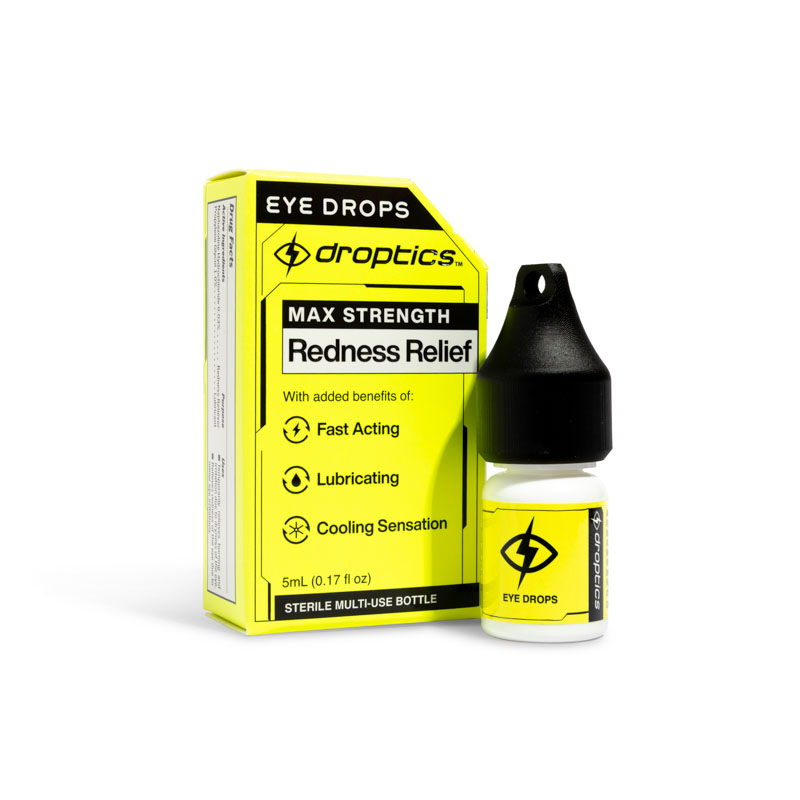
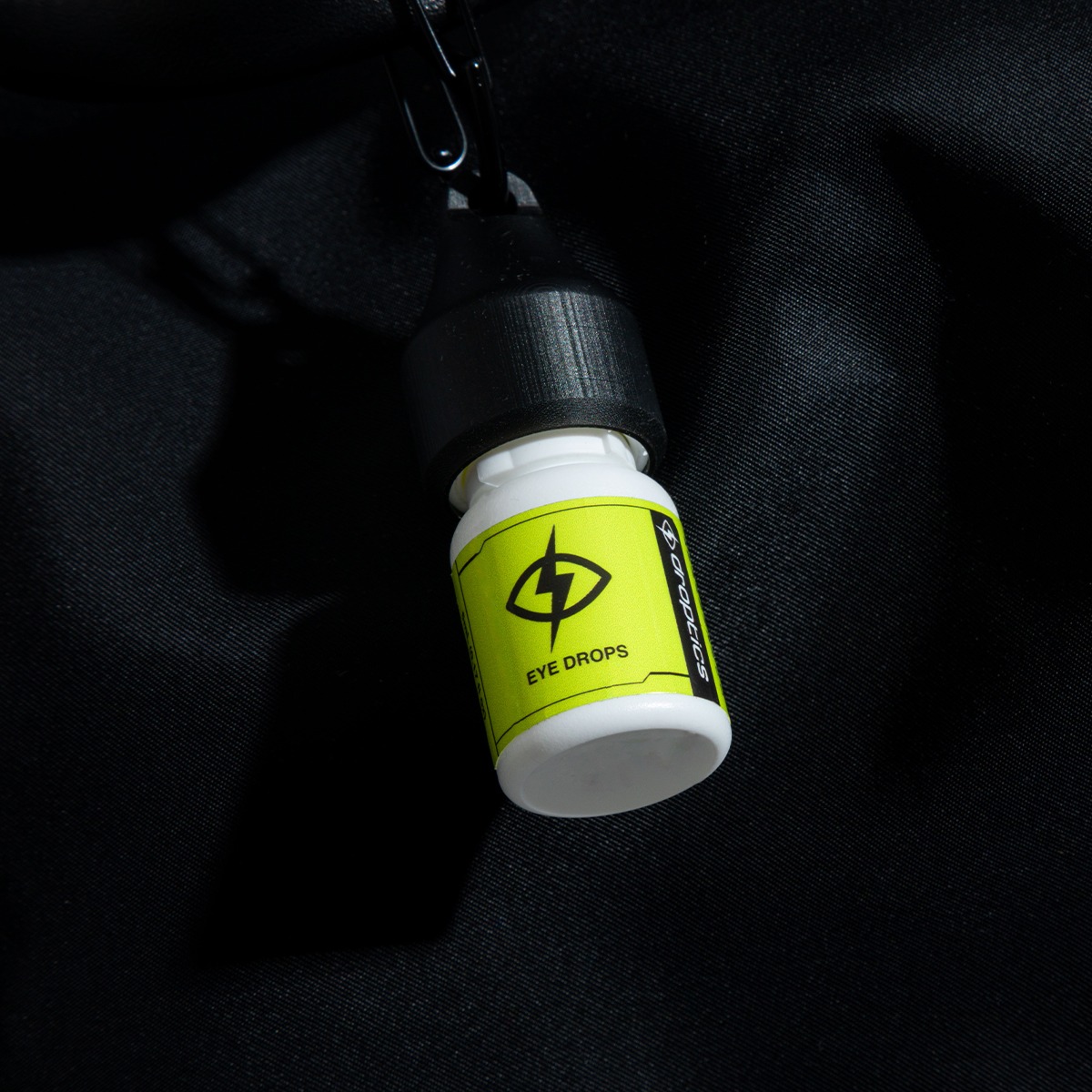
This is where Droptics comes in. These eye drops are designed to address multiple parts of this screentime-related chain reaction rather than a single symptom.
Droptics includes propylene glycol (1.0%), a demulcent commonly used in artificial tears, to address the tear film disruption caused by reduced blinking. Propylene glycol helps lubricate the eye surface and stabilize the tear film, providing relief from dryness caused by tear evaporation during extended screen use.
This directly supports the tear film deficiencies documented in clinical research on digital eye strain and dry indoor environments.
Droptics includes caffeine and taurine, ingredients associated with tear production and ocular metabolism. Caffeine has been shown in small clinical studies to increase tear secretion, while taurine is a naturally occurring amino acid concentrated in retinal tissue and involved in maintaining normal visual function.
These ingredients align with research showing that visual fatigue during prolonged near work is not only a surface issue, but also related to sustained metabolic demand within the eye.
Droptics also contains menthol and camphor, which activate cold-sensitive receptors on the ocular surface. Research shows that stimulation of these receptors can increase tear secretion and blinking reflexes without causing tissue irritation when used at low concentrations.
The resulting cooling sensation may help counteract the reduced blink rate observed during screen focus by prompting more frequent and complete blinking, improving tear distribution across the eye.
Droptics contains naphazoline hydrochloride (0.03%), a vasoconstrictor that temporarily reduces eye redness by narrowing dilated blood vessels on the surface of the eye. This mechanism is well-established in ophthalmology and provides fast cosmetic relief when eyes appear bloodshot after prolonged screen exposure.
By pairing redness relief with lubrication and comfort-focused ingredients, Droptics may reduce reliance on repeated vasoconstrictor dosing, which is commonly associated with rebound redness when used in isolation.
An eight-hour screen day places sustained demands on blinking, tear stability, and eye muscle function. Reduced blinking begins almost immediately when looking at screens. Tear evaporation accelerates in dry indoor air. Focus muscles remain contracted for hours. By late afternoon, dryness, redness, and visual fatigue are common, well-documented outcomes.
Understanding these mechanisms helps explain why eye discomfort isn’t a personal failure or a sign of aging. It’s a predictable physiological response to how modern work environments ask our eyes to perform. Droptics provides a solution to these effects and concerns.
Referenced sources:
University of Iowa Health Care - Computer Vision Syndrome
https://uihc.org/health-topics/computer-vision-syndrome
Cleveland Clinic - Computer Vision Syndrome and Eye Strain
https://health.clevelandclinic.org/computer-vision-syndrome
https://my.clevelandclinic.org/health/diseases/16645-eye-strain
Clinical Ophthalmology - Digital Eye Strain Review
https://www.ncbi.nlm.nih.gov/pmc/articles/PMC6020759/
Mayo Clinic - Dry Eye Causes
https://www.mayoclinic.org/diseases-conditions/dry-eyes/symptoms-causes/syc-20371863
American Optometric Association - Computer Vision Syndrome
https://www.aoa.org/healthy-eyes/eye-and-vision-conditions/computer-vision-syndrome


.webp)


.webp)